
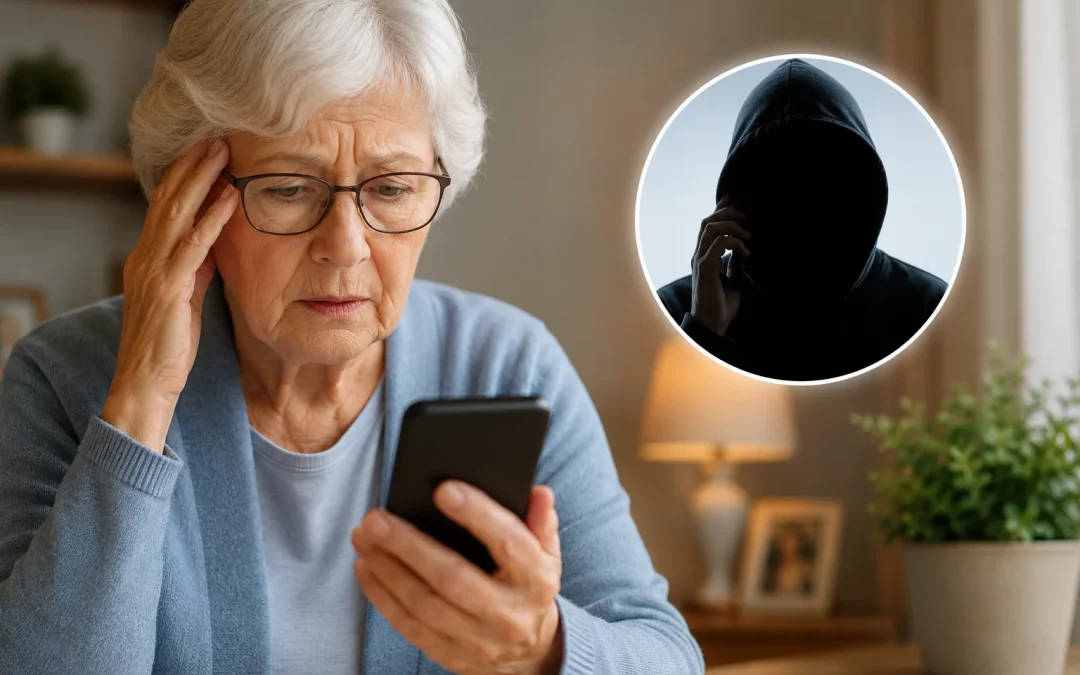
Yes, if someone calls claiming to be your grandchild and urgently asks for money, it is usually a scam. These calls are designed to create panic, but most seniors can stay safe by hanging up, slowing down, and checking with a trusted family member first.
Table of Contents
- Quick Summary
- What This Usually Means
- Step-by-Step: What to Do If You Get This Call
- When This Is NOT Normal
- What Can Go Wrong
- Safety Reminder
- FAQ
- Final Summary
Quick Summary
- Scammers pretend to be your grandchild (or a lawyer, police officer, or doctor) and say there is an emergency and they need money right now.
- The most common cause is a criminal using fear and urgency to make you act before you think.
- It usually takes just a few minutes to protect yourself: hang up, call a trusted family member, and do not send money.
- It is serious if you already sent money or shared personal details; you may need to contact your bank and consider identity theft protection.

What This Usually Means
The “grandchild scam” is when someone calls, often late at night or early in the morning, and pretends to be your grandchild in trouble. They may say they were in a car accident, arrested, or stuck in another country and need money right away.
This happens because scammers know grandparents care deeply and will act quickly to help. They may use a shaky voice, say “please don’t tell Mom or Dad,” and demand secrecy. That pressure is part of the trick.
For example, a senior named Mary got a call: “Grandma, it’s me. I had an accident. I need bail money.” The caller knew her grandson’s name from social media. She almost sent money before calling her daughter to check.
A common misunderstanding is thinking, “They knew my grandchild’s name, so it must be real.” In truth, names are easy to find online. The limitation is that you cannot tell by voice or caller ID alone; you must verify with another trusted source.
Step-by-Step: What to Do If You Get This Call
These steps will help you stay safe if someone calls claiming to be your grandchild (or about your grandchild) and asks for money. You do not need any special apps or settings, just your phone and a calm moment.
Time required: 5–15 minutes
Difficulty: Easy
- Stay calm and do not agree to anything.
Take a slow breath. Do not confirm any personal details. Do not say your grandchild’s name first; let them say it. If they say, “Grandma, do you know who this is?” that is a red flag. - Hang up the call.
You are allowed to hang up, even if they sound upset or angry. If they say, “Don’t hang up or I’ll be in big trouble,” that urgency is part of the scam. Hanging up protects you. - Call your grandchild or a trusted family member directly.
Use the number you already have saved in your phone or written down, not any number the caller gave you. If your grandchild does not answer, call their parent or another close relative.If you don’t see this contact in your phone: use a written phone list, or call another trusted person (neighbor, friend, or family member) and ask them to help you check.
- Do not send money or gift cards.
Never send money by wire transfer, gift cards, cryptocurrency, or cash in the mail for an “emergency” call. If someone tells you to buy gift cards and read the numbers over the phone, it is almost certainly a scam. - Write down what happened.
Note the date, time, phone number, and what they said. This can help your bank, the police, or your family if you need to report it. - Tell a trusted person and consider extra protection.
Share what happened with a family member so they can warn others. If you gave out personal details (Social Security number, bank info), consider learning about identity theft protection.
A common mistake is feeling embarrassed and keeping it secret. Scammers count on silence. The limitation is that once money is sent by gift card or wire, it is usually very hard to get back, so acting quickly is important.
When This Is NOT Normal
It is not normal for a real grandchild, lawyer, or police officer to:
- Demand secrecy and say, “Don’t tell anyone, especially your family.”
- Ask for payment by gift cards, wire transfer, or cryptocurrency.
- Refuse to let you call back on a known number.
- Threaten you with arrest if you do not pay immediately.
Seek help right away if:
- You already sent money or gift cards.
- You shared your Social Security number, bank account, or credit card details.
- The caller keeps calling back and pressuring you.
Contact your bank or credit card company if you sent money. They can tell you what to do next. If you feel unsafe or threatened, call your local police (non-emergency line) and explain you may have been targeted by a scam.
What Can Go Wrong
Sometimes things are confusing even when you try to be careful.
- Number is blocked or missing: If you cannot see the caller’s number, that is common with scammers. You can still write down the time and what was said.
- Caller ID shows your grandchild’s name: Scammers can fake caller ID. Always hang up and call back using the number you already know, not the one that called you.
- Details sound very real: They may know your grandchild’s school, city, or job from social media. This does not prove it is real; still verify with family.
- Restarting your phone doesn’t help: This is not a phone problem. It is a people problem. The solution is to stop contact and verify with trusted family, not to change phone settings.
Safety Reminder
When dealing with calls, messages, or emails about emergencies:
- No real company, court, or police department will demand payment by gift card, wire transfer, or cryptocurrency.
- No honest helper will ask to control your computer or phone remotely just to “fix” this situation.
- Be very cautious of any message that tries to make you panic. You can read more about this in The ONE Sentence Scammers Use to Make Seniors Panic.
- Only trust phone numbers and contact details you already know or can confirm from an official website or family member.
Staying calm and careful with these calls can reduce stress and help you stay connected with your family in a safer way.
FAQ
Is this serious?
Yes, it can be serious because scammers want your money and personal information, but you can usually stop it by hanging up and checking with family.
Will I lose my money?
If you do not send anything, you will not lose money. If you already sent money, contact your bank or card company immediately; sometimes they can help, but not always.
Do I need to pay anyone to fix this?
No. You do not need to pay any fee or service to “fix” a scam call. The main fix is to stop contact and warn your family.
Is this a virus on my phone?
No, this is usually not a virus. It is a person calling you and pretending to be someone else. Changing phone settings or buying antivirus will not stop this type of scam.
How long does it take to handle?
Most of the time, it only takes a few minutes to hang up, call your real grandchild or family, and make sure everyone is safe.
Can someone help me with this?
Yes. Ask a trusted family member, friend, or caregiver to help you check any suspicious call. If you shared personal details, your bank or an identity theft protection service can guide you on next steps.
Final Summary
The “grandchild scam” is when someone pretends to be your grandchild in trouble and pressures you to send money right away. It is frightening, but in most cases you can protect yourself by hanging up, not sending money, and checking directly with your family.
If you already shared money or personal details, contact your bank and consider extra protection such as identity theft protection. With a few simple habits, you can stay safer on the phone and feel more confident helping your real family when they truly need you. If you are ever unsure, pause and ask a trusted person to look at the situation with you.